Road Signs, a Radio Drama & Crocodile Dundee - 3 Quick Lightning Ridge Stories →
Streets of Sydney, a 1952 radio drama and a celebrity's birthplace? Three quick stories about Lightning Ridge!

All things are interesting things.
All things are interesting things!
Streets of Sydney, a 1952 radio drama and a celebrity's birthplace? Three quick stories about Lightning Ridge!
Curiosity Mine and The Dinomaniacs arrange for Mike Poben, discoverer of Weewarrasaurus pobeni to have a first hand encounter with a recreation of his own dinosaur!
Special thanks to The Dinomaniacs for their patience and enthusiasm in helping to make this video. Thanks also to the Australian Opal Centre at Lightning Ridge, and of course Mike Poben for his discovery, participation and good nature.
There's a deadly menace on the Australian opal fields, it's nasty, has two-inch spines and it kills.
Hudson Pear is an invasive cactus species that has unfortunately infested large areas of the opal fields at Lightning Ridge, NSW, Australia. It has also spread to the other Australian opal fields, and is spreading throughout the rest of the country.
In the first video in the Bush Botany series, featuring Warwick Schofield, we look at Hudson Pear. Its origins, its biology, its interaction with humans and animals, its impact on the opal fields, its future spread. We also look at methods of controlling the cactus outbreak, past and present, and how YOU can help to contain and limit the spread of this vicious plant.
Was there a piece of Australian opal in an episode of Star Trek? And while we're at it, has opal ever appeared in Star Trek before?
This video was inspired by Star Trek: Strange New Worlds season one, episode four, "Memento Mori". You can watch Strange New Worlds on Paramount Plus: https://www.paramountplus.com
Is this the tiniest dinosaur ever found in Australia? Quite possibly! Two fossils found four decades apart tell the story of embryonic dinosaurs in prehistoric outback Australia.
This video features Dr. Phil Bell from the University of New England Armidale at the Australian Opal Centre's annual Fossil Dig!
Built in the 1930s, the heritage cottage in Morilla Street, Lightning Ridge was home to the Spicer family and the Graham brothers, and now houses part of the LRHS's extensive opal mining heritage collection.
In this video I speak with Barbara Moritz, secretary and treasurer of the LRHS about the shack's significance, history and role in the foundation of the society that now works to protect and preserve Lightning Ridge history in all forms.
Let's have a look at the only time Lightning Ridge has ever appeared in a video game -- the same video game as everywhere else!
Special thanks to Chris for recording the game footage used in this video.
Prehistoric animals ate a lot of things, and whatever they ate had to come back out again somehow -- lets check out some coprolites and regurgitalites!
Special thanks to Dr. Elizabeth Smith and Jenni Brammall for their assistance, patience and good humour.
For decades opal has been traditionally cut into the oval cabochon shape, but now opal carving is quickly becoming a great alternative. We discuss the pros and cons and examine some incredible examples of carved opal.
This video was made with the help of Down to Earth Opals, at Lightning Ridge. Special thanks to Vicki and Andrew at DTEO.
Engineer, blacksmith and innovator Harry Zack built this metalworking anvil almost a century ago from recycled parts -- check out how recycling and reuse has been part of Lightning Ridge's opal mining heritage since the very beginning.
This video was made with the help of the Lightning Ridge Historical Society with special thanks to Barbara Moritz.
Doublets, triplets and mosaics are ways of making something more out of something less, and an artform in their own right. I spoke with Vicki at Down To Earth Opals at Lightning Ridge about these kinds of opals, and looked at some spectacular examples!
Welcome to Opalwords, a series of videos about the terminology used in the opal mining industry and specifically at the opal mining location of Lightning Ridge in Northern New South Wales, Australia, and the home of the black opal.
In this video we look at an incredible donation of more than 450 opalised fossils from opal fields around the world, generously donated to the Australian Opal Centre by Paul Sedawie.
Paul shows us some of his favourite pieces from the collection including bivalve molluscs, belemnites, snails, dinosaur bones, plant fossils, turtle shell and so many more incredible pieces.
Lungfish are a living fossil with some pretty amazing capabilities.
One of the Australian Opal Centre's most avid contributors, Vicki, shows us some opalised fossils of lungfish tooth plates, as well as some opalised fossils of some of the creatures that prehistoric lungfish used to eat over a hundred million years ago.
Also, I get very excited about why lungfish are incredible creatures, both now and eons ago!

Lungfish. Human for scale.
What's a monkey in an opal mine? How about a pig-sty? We look at a LOT of words relating to opal mining!
Welcome to Opalwords, a series of videos about the terminology used in the opal mining industry and specifically at the opal mining location of Lightning Ridge in Northern New South Wales, Australia, and the home of the black opal.
North western New South Wales is the "Wild West" of Australia, and it has some outrageous stories, too. This is the story of the old Castlereagh Highway and the Weetalibah Hotel.
Be sure to check out the previous video about the Weetalibah floodway: https://www.youtube.com/watch?v=TVF8P...
Some additional material and photographs relating to the Weetalibah Hotel and the murder of James Davidson, 1914:

Weetalibah Hotel, 1920s.

Percy Hatfield, Vea Morris, Si Morris, Mrs. Morris, Mrs. Beckett and Reg Beckett at Weetalibah, 1922.

Kitty Young and pets at Weetalibah, 1924.

Mug shot and personal details of George Chun, recorded at Armidale, November 1914.

Constable Frederick Mussared, police officer at Lightning Ridge, 1908-1914.
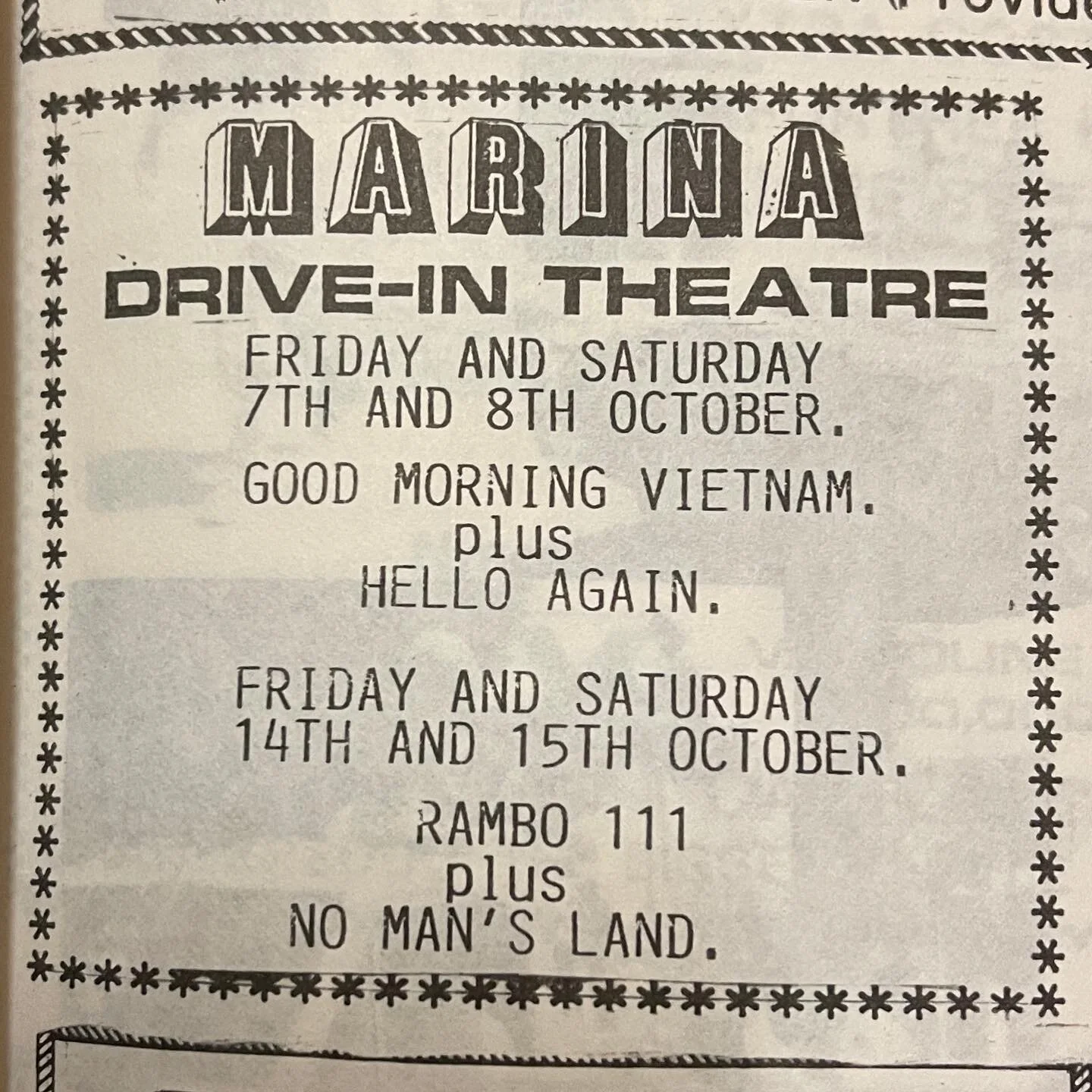
A look at Lightning Ridge's former cinema under the stars, the Marina Drive-In Theatre!
In this video I speak with Barbara from the Lightning Ridge Historical Society about some recent donations to the Historical Society's collection of Lightning Ridge cultural and opal mining heritage items: speakers from the Drive-In Theater. I also spoke with Barb about her unique connection with the cinema - she used to live in it!




A quick tour of Lightning Ridge, NSW, in 1975!
This is an old 8MM film of Lightning Ridge shot by my father on his first visit to the opal mining town in '75. I've had the film enhanced via artificial intelligence to improve the quality and frame rate.
What is a "muggy" or "mug stone" on the Lightning Ridge opal fields?
Welcome to Opalwords, a series of videos about the terminology used in the opal mining industry and specifically at the opal mining location of Lightning Ridge in Northern New South Wales, Australia, and the home of the black opal.
Thank YOU for watching!
What was the climate of Lightning Ridge like 100 million years ago? This little piece of crocodile fossil can tell us!
In this video I speak with Dr. Phil Bell from the University of New England Armidale about an awesome piece of crocodile bone fossil discovered at the Australian Opal Centre's annual Fossil Dig!
Lightning Ridge is a town without a river, but this area just to the north floods REGULARLY.
I spoke with Barbara Moritz from the Lightning Ridge Historical Society about Weetalibah Crossing, a causeway where a natural flood course intersects the Castlereagh Highway. The Historical Society has in its collection a steel boat that dates to around 1923, found high and dry in a field, no doubt a remnant of a flood in the area a century ago.
There will be a follow-up to this video in future, as Weetalibah has a few more interesting stories for us to tell!


